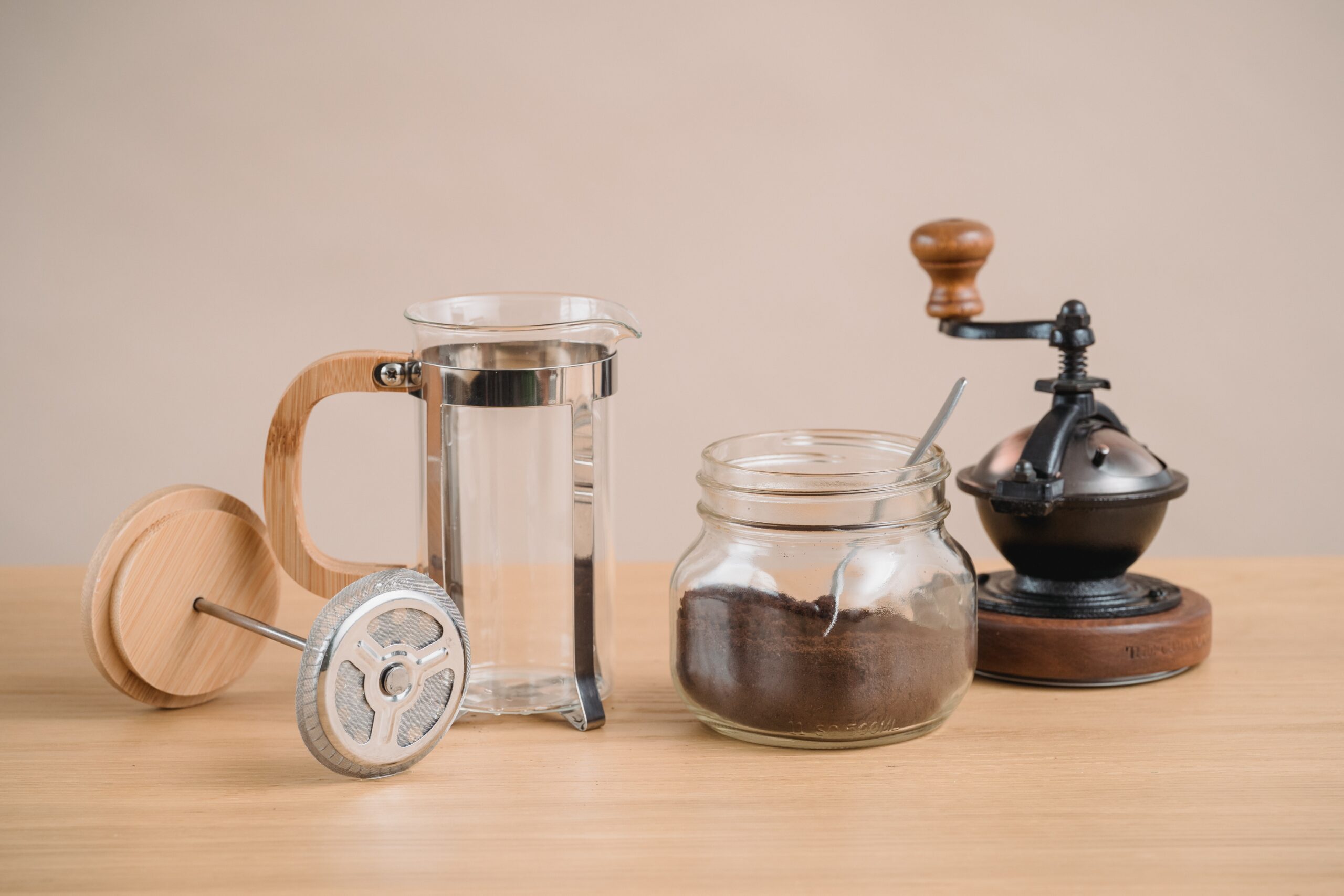
If you’re thinking about buying a coffee grinder to improve your morning cup, your first question is probably: should I buy an electric or manual grinder? Easy! Manual.
Just kidding…it’s not that simple. In this guide, I’m going to get into the specific differences between electric and manual coffee grinders. I’ll explain differences in cost, quality, durability, longevity, value, and, most importantly, how each will affect the taste of your coffee. Let’s dive in!
Electric vs Manual Grinders: Do I Even Need One?
The answer to this question IS simple, and it’s a resounding “YES.” In my opinion, the single biggest improvement you can make to your coffee is going from pre-ground to whole bean and grinding the beans yourself.

There are some pretty scientific reasons for this, which you can read more about in our article about the science of coffee grinding and why it matters.
For now, though, just know that pre-ground coffee loses freshness significantly more quickly than whole bean coffee. The increased surface area being exposed to oxygen and moisture means pre-ground coffee will lose flavor, sweetness, and a whole bunch of other compounds rapidly, leading to a bland cup.
So yes, investing in a grinder is important. Now to answer which is better: electric or manual.
Electric vs Manual Grinders: What’s the Difference?
The primary difference between electric and manual coffee grinders is, of course, how the machine is “powered.” An electric grinder gets plugged into the wall and uses electricity — duh — and a manual grinder is one that requires you to turn a crank to grind your coffee beans.
However, there are a ton of more specific differences you should consider when deciding which one to buy. I’ll discuss each of the most important things to think about below.
I should mention that I will mostly be discussing burr grinders. Electric blade grinders do exist — I’ve never seen a manual blade grinder, though, and I don’t think that’s possible — but they’re super inconsistent. Although they’re affordable, I highly recommend against an electric blade grinder.
Okay, now let’s dive into the differences between electric and manual grinders.
Price and Value for the Money
First off, the price and what you get for the money will be a significant difference between manual and electric coffee grinders. Generally speaking, you’ll get more value for the cost when you buy a manual grinder.
Both manual and electric burr grinders can provide outstanding grind size consistency that leads to a great cup of coffee. However, when you buy an electric grinder, a lot of the cost goes into the powerful motor that needs to turn the burrs. When you buy a manual grinder, virtually all of the money goes into the burrs themselves.
At similar price points, you’ll get higher-quality burrs on a manual grinder that lead to better coffee overall. You can check out our guide to buying a coffee grinder for more information.
Durability
In most cases, a manual grinder will outlast an electric one simply because there are fewer parts that can fail.
The burrs that grind your coffee will probably last for a decade or more, especially if they’re steel burrs. Ceramic burrs will dull more quickly and can crack if you drop your grinder, but in most cases, the actual grinding mechanism will last for a long time whether you buy a manual or electric grinder.
The biggest difference in durability is with the power source. The motor on an electric grinder is usually the first component to break down, and as long as you’re around to use a manual grinder, you’ll never lose the power source!
High-quality electric grinders can last just as long as manual ones, but you’ll pay more for durability on the motor and other components.
Convenience
If convenience is what you’re after, then choose an electric grinder, for sure. With this type of coffee grinder, you simply choose your grind setting, hit start, and wait about 20 to 30 seconds for the grinding to finish. With a manual grinder, you’ll likely spend a minute or more turning the crank to grind your beans, and it takes a bit of effort to do so.
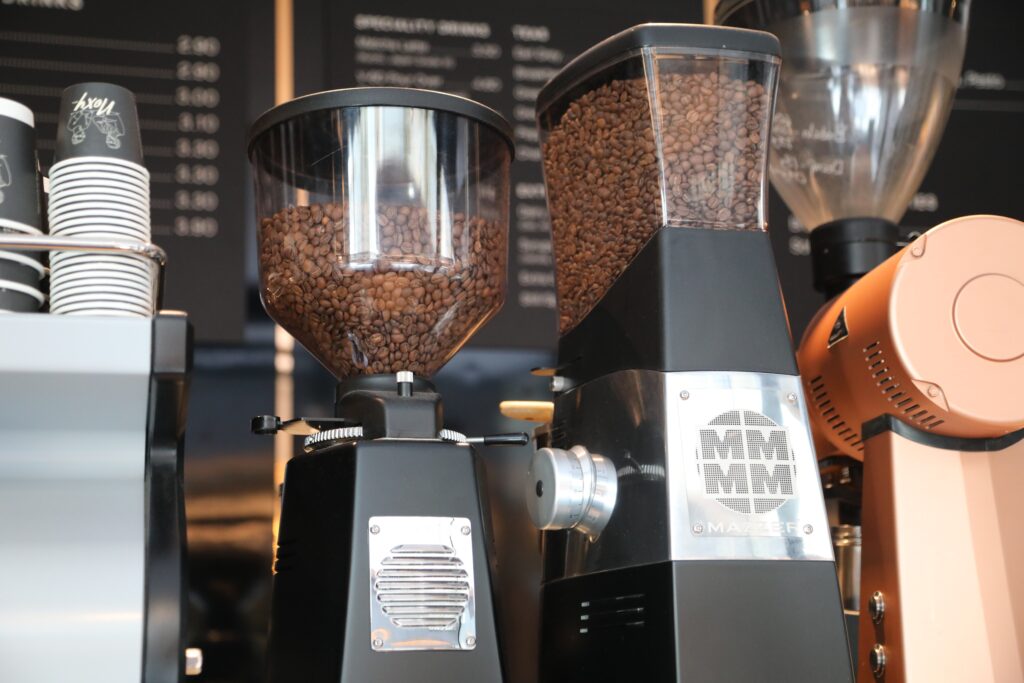
Personally, I enjoy the process of manually grinding coffee. It has become a therapeutic part of the brewing process, but that’s just for me. You’ll have to decide if you want to stand there and spin a crank every morning just to have great-tasting coffee.
Grind Size Consistency
Grind size consistency refers to two things: how uniform the grounds are in a single batch and how consistent the grounds are from batch to batch. Grind size consistency is crucial for a few reasons.
First, consistency within a batch means a well-balanced cup of coffee. Part of the problem with cheap coffee grinders and electric blade grinders is that they’ll produce a huge variance in grind size, with a single batch containing both large pieces and tiny pieces of crushed coffee beans.
The large pieces will extract more slowly, the small pieces will extract more rapidly, and you’ll get a whole slew of weird ratios of different coffee compounds pulling into your brewed coffee. This can lead to bitterness, acidity, sourness, and other flavors that make your coffee taste bad.
Second, consistency from batch to batch means you can continuously make delicious coffee once you figure out the ideal grind size. It also means you can make small adjustments that make a consistent difference in your brewed coffee until you get to that point. Overall, grind size consistency is super important.
Electric blade grinders are the worst in terms of consistency. Conical burr grinders are excellent, and flat burr grinders are considered ideal. However, the price goes up as you improve the grinding mechanism.
I would avoid electric blade grinders entirely. That leaves you with manual and electric grinders and flat and conical burrs as options. For a given price point, manual grinders will be far more consistent than electric grinders.
If you’re on a budget but still want outstanding consistency, a manual grinder is absolutely the way to go. If you want the highest consistency possible AND the convenience of an electric grinder, then expect to spend $400+.
Generally speaking, flat burr grinders provide better consistency than conical burr grinders of equal quality and cost. Most manual grinders use conical burrs, though — the Pietro manual grinder is an exception, but it’s not available yet as of this writing — so flat burrs are generally only available on electric grinders. One of the best, in my opinion, is the Fellow Ode Brew Grinder.
Grind Size Adjustments
In addition to the grind size consistency, it’s important to consider how and how much you can adjust the grind size.
In terms of how to adjust the settings, you have two options: step grind settings and fluid grind settings. Step grind settings are pre-set steps, or distances between the burrs, which control the size of your grinds. Fluid grind settings — also called step-less grind settings — are just that: fluid. There are no steps that you are forced to abide by, so you have infinite possibilities within the minimum and maximum distances between the burrs.
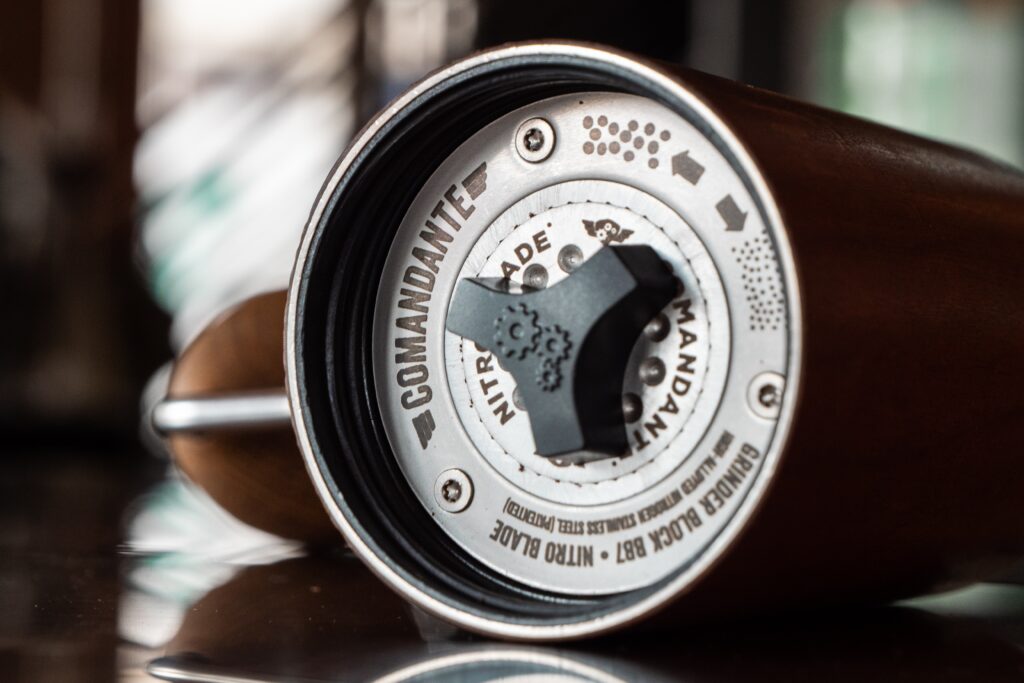
Fluid grind settings are technically better because you can adjust without limits. However, adjusting the settings on a step-less grinder — like the Lido 3 that I use every morning — can be a bit of a pain. Stepless manual grinders can be quite affordable. Stepless electric grinders are usually prohibitively expensive for home brewers, on the order of $1,000 and sometimes reaching up to several thousands of dollars.
You’ll also want to consider how much you adjust the grind settings, which is to say the minimum and maximum distance you can set between the burrs. Larger gaps can be used for cold brew and French press, which demand a coarser grind, while smaller gaps can be ideal for espresso and even Turkish coffee, which demand fine grinds.
In my experience, manual grinders tend to have a larger range of grind sizes you can choose from. Many are suitable, although not ideal, for everything from espresso to cold brew.
Portability
Manual grinders are made to fit in your hand and be lightweight enough to hold comfortably, at least for as long as it takes to grind your coffee in the morning. Electric grinders are meant to sit on your countertop. They’re big and bulky, and they don’t transport well.
For the large majority of coffee drinkers, I suspect this won’t matter much. However, for people who like to bring high-quality coffee with them on trips, this can be a selling point. For example, manual grinders are much more conducive to bringing on camping trips and ski trips, where a hot cup of delicious coffee is often quite welcome. So if you want coffee gear you can travel with, a manual grinder is the way to go.
Ease of Cleaning
Manual grinders are also far easier to deal with in terms of cleaning. On a daily basis, you’ll want to brush out any grounds that get caught in your burrs, the catch cup, or other parts of the machine. This happens with all grinders and is called grind retention. This retention is more difficult to clean out of an electric grinder, usually just because they have smaller nooks and crannies where the grounds can get caught.
This also makes it more challenging and time-consuming to do a deep clean of your grinder, which should be done every few months to remove oils that can gunk up the burrs along with stuck grounds. You will need to do this cleaning more often if you grind a lot of dark roasts, which tend to have more oils.
Much like the daily brushings you’ll need to do, the process to clean a coffee grinder will take longer with an electric grinder.
Hopper Size
The hopper size or batch size is a less important factor to consider than most others, but you should be aware of how your options differ.
Manual grinders tend to have smaller “hoppers,” which are the compartments where you load the beans prior to grinding. I’ve seen hoppers as low as around 25 grams of beans and others as high as around 60 grams. Most fall within this range.
Depending on how much coffee you or others in your home drink per day, you may need to load the hopper on a manual grinder multiple times to make coffee each day. This isn’t a huge deal, but compounded over several years, that time can add up.
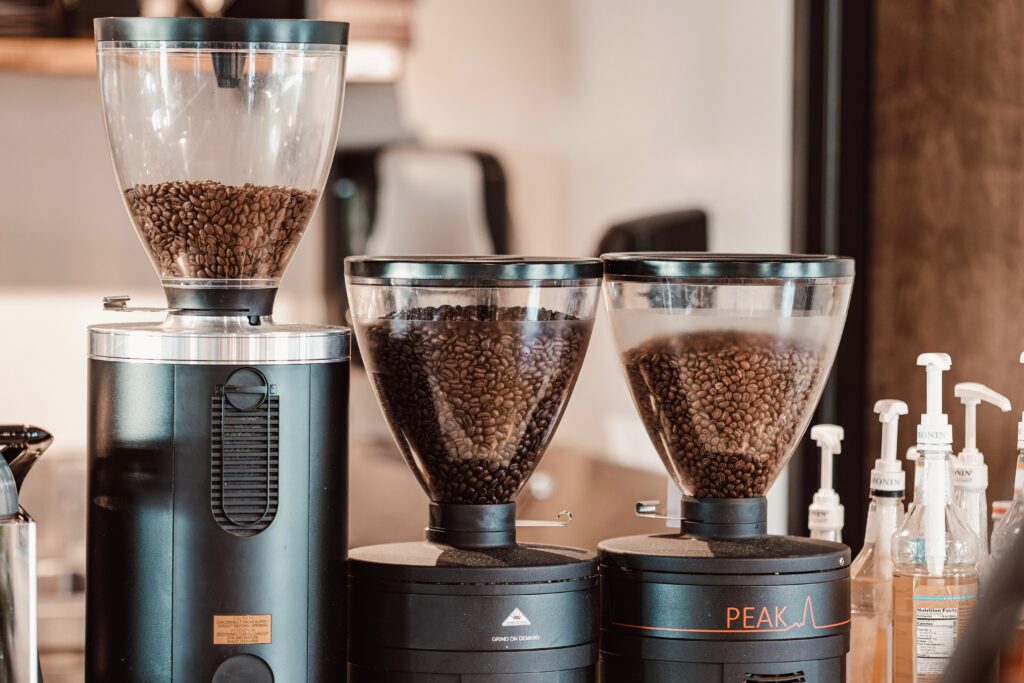
Electric grinders usually have much larger hoppers, in part because they’re meant to sit on your countertop and not to hold in your hand. Many of the more popular options have hoppers that can hold several days’ worth of coffee, sometimes around 8 ounces of beans, or about 226 grams of coffee. In some cases, that means you’ll have to refill the hopper ten times less frequently for an electric grinder.
Grind Time
Since electric grinders use powerful motors to turn the burrs that grind your coffee, it should go without saying that they will grind any given volume of coffee more quickly than you could ever do with a manual grinder. Even if you really buckle down and give it the old college try, you’ll be outpaced by a motor…and you’ll look ridiculous and possibly feel ashamed that grinding your coffee leaves you in a flop sweat.
I grind around 56 grams of coffee beans per day. With an electric grinder — I specifically use the Baratza Virtuoso Plus — that quantity is done in around 25 seconds. When I use my manual grinder — I use a Lido 3 from Orphan Espresso — that same mass takes me about a minute and a half to grind.
This isn’t a huge difference, especially since I grind while my water is heating up. But still, if you’re looking for expediency, which is understandable early in the morning before you’ve had your coffee, then an electric grinder is probably better for you.
Noise
Lastly, the noise might be something you want to consider. If you know you’re up before everyone else in the morning and you try your best to keep the noise to a minimum out of respect for everyone else, firing up an electric grinder to smash through your coffee beans at 5am isn’t going to be ideal. Manual grinders are much quieter and will rarely disturb anyone from sleep unless you grind your coffee right next to a family member’s pillow.
Which Is Better: A Manual or Electric Coffee Grinder?
The answer to this question is really up to you, as the two differ in so many departments.
If you want to maximize quality for the money, get something a bit more durable, or get a grinder that makes minimal noise, is easy to clean, and is more portable, a manual grinder is probably right for you.
If you want a grinder that gets the job done quickly, requires no effort from you, and you don’t mind spending a bit more for convenience, then an electric grinder might be the way to go.
The tips above should help you decide which type of coffee grinder will suit you best.
FAQ
What’s the difference between conical and flat burrs?
Conical burrs consist of two burrs — one cone-shaped and one with a cone-shaped cut-out — that fit together with a small gap at the bottom. As coffee beans get pulled downward by gravity, the burrs spin and crush the beans until the grounds of uniform size fall out of the bottom gap.
Flat burrs are, unsurprisingly, flat, and they have a gap that runs around the edges for the grounds to escape.
Flat burrs are usually more consistent than conical burrs, but they’re also more expensive in most cases.
Is an electric blade coffee grinder any good?
Generally speaking, no. Blade grinders are cheap, and they can be a small step up from using pre-ground coffee. However, they don’t provide much consistency within each batch, and they provide little consistency between batches as well. You’re much better off investing in even a cheap conical burr grinder.
Should I buy a coffee machine or espresso machine with a built-in grinder?
I would recommend against this. Most of the time, manufacturers skimp on the quality of the grinder in order to keep the total product price down. Not only will a grinder in a costly machine likely not be particularly good or consistent, but if it fails, you then have to think about replacing the entire machine rather than just the grinder.
What kind of grinders do professional coffee shops and roasters use?
You’ll almost never see coffee shops or professional coffee roasters using manual grinders simply because of the volume they churn through every day. Instead, they use high-quality electric grinders — with either conical or flat burrs — that are made for industrial use.
These grinders are prohibitively expensive for home brewers, and the value they provide is in longevity and durability, not particularly in consistency. As such, they’re not a great investment for home use, even if money is no obstacle.
What is the best coffee grinder for home use?
In my opinion, the best manual grinder for making coffee at home is the Lido 3 from Orphan Espresso. I use this grinder almost every single morning. I think the best electric grinder overall is the Baratza Virtuoso Plus, which I use when I’m feeling a bit lazy or when I’m in a rush. You can check out my complete review of the best coffee grinders for home use for more information on these and other recommendations.